Lisa Guernsey has some interesting points - many of which I agree. I feel a need to respond to this as I continue to formulate my ideas around best practice of ICT as a tool in ECE. Watch this space....
This seems to be an odd question, given its 2014 and iPads infiltrated our society back in 2010. However, I still believe, its a good question.
Technically it’s a rectangular screen with finger touch sensitivity. It can connect to the world wide web via a wifi (wireless router), or in some cases via the cellar mobile network. It has two cameras (front and back), speakers and a microphone all inbuilt into the screen. It comes with a base set of applications or programmes - called ‘apps’. Apps can be purchased and loaded onto the screen via an online store. Apps are used to access and create digital information. Many apps are free but contain advertising. More specialised and ad-free apps are purchased relatively cheaply.
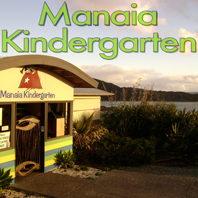
Given all these technical capabilities, the iPad enables us to connect to almost anyone, anywhere who has a regular phone, mobile phone, computer or ipad. It enabled me to send instant photos to the children of Manaia Kindergarten (New Zealand) from the heart of Kruger National Park (South Africa) - while tracking an elephant. It has enabled me to find my way through a rural township in South Africa that had not street lights. Its capabilities seem almost endless.
Apple, the company that designed, created and brought the iPad into our homes describes the iPad as its "most advanced technology in a magical and revolutionary device”
Were they right?
If we are to accept the iPad into our lives, we must endeavour not to be trapped in the rectangular screen - but to dream big, explore widely, and embrace the magic.
Since my last blog post there have been many changes to my situation. I have resigned from my position as Head Teacher at Manaia Kindergaten. It was time! I had been at Manaia for 10years. I continue to love the kindergarten, its community and the teaching team, but it was time to refresh my batteries and experience new adventures.
I am currently working as a relieving teacher for the Northland Kindergarten Association. It has been the best professional development I could have hoped for and I highly recommend that others do the same. If you have a teaching job and just want to explore other ece's - talk to your management about a few days of professional development to visit other kindergartens or centres. Don't pop in for a few hours - take 3 days and visit 3 different centres. At the very least, do that.
As I move from kindergarten to kindergarten I am being asked to provide some ICT support - which of course I am happy to do in the context of the day. I am amazed how much ICT comes up in my practice - particularly trying to capture children's voice. I don't need to encourage children to share their stories, children I am new to are eager to tell me their stories. I video, take photos and type their words onto the photos when appropriate. Wherever possible I try to use the kindergarten's cameras, iPods and iPads. I have been surprised at the technology kindergartens have and how they are using it.
My interest has been spiked. What 'latest' technologies do early childhood centres have in new zealand and around the world? And how are they using their technologies?
How about you and your ece?
What do you have in the way of digital technology and how confident do you feel you are using it?
Are the digital technologies offering you and the children the extended learning opportunities you had hoped for?
Please be honest and if you want to remain anonymous you do have that option when posting a comment.
PS: Another change in the air - its election year. Lets make that count!! More on that later.
Currently in New Zealand the National Government is encouraging schools to run more like businesses. They have introduced standard tests and they rate schools according to 'best standard performance'. These standards supposedly hold schools and teachers accountable for the work they achieve. The National Stardard tests and ratings supposedly show families which schools are the best schools.
The push to conform to standards is a rising tide that is drowning teacher's passions and squashing student's intrinsic motivation. Learning to a formula and rewarded with 'carrots' and gold stars will only create robots.
I think the National Government and 'Big' Business has it wrong.
What if the current business model (in big business and now in schools) strips people of their intrinsic motivation, and productivity decreases to a standard level? Dan Pink's TED talk makes a case against the standard business model.
What if the model changed to something more in tune with people's intrinsic motivation and passions - because we can't go on doing the same standard things for 'carrots' and gold stars.
So what are your children learning in school?
Why are your children learning the things they are learn in school? Is it enough?
Who is their motivator?
What is motivating them to learn more and rise above the standard?
At Manaia Kindergarten we are updating our ipad and ipod touches with musical instrument apps. After listening to Kevin Honeycutt at the Teachers for Teachers workshop, the team as a whole was once again inspired to explore new ways of doing things.
We have contemplated installing complex music systems to go with our ipad and ipods. However, Kevin Honeycutt's use of a simple amplifier and splitters would do perfectly for what we are hoping to achieve at Manaia.
So a search for some worthwhile music apps has been undertaken.
Melody Bells and Piano have already been successful apps at Manaia. Piano has particularly supported children, not only to explore notes, but to follow simple instructions to create a musical piece. The smiles on faces has encouraged others.
But the ipad/ipod technology allows us to think outside the square. Although 'real' instruments are amazingly beautiful, there are apps that allow you to create music in a new, different and beautiful way. One I explored today is Musical Squares. It's interface is simple and plain - but somehow mesmerizing.
Bloom is an artistic variation of Musical Squares. It creates a visualisation that is almost hypnotic. Apart from the difference in its interface from Musical Squares, Bloom allows the music to eventually fade, allowing new music to be added - and so the piece continues to be composed.
I look forward to using these apps in our final mat times of the day (as well as throughout the session). In our final mat time, we sit, read and share books with one another, whilst listening to relaxing music. Currently children are able to choose the quiet music. They have drawn their own pictures to match the songs they enjoy and loaded them onto the ipod (this makes it easier for them to identify the different music). With Musical Squares and Bloom, children will be able to CREATE their own relaxing music. I look foward to exploring this with the children.
What an inspiring bunch of awesome educators who have been on this incredible journey with me. The wisdom, knowledge and skills we have shared together has taken my learning to another level. Efellows for life - friends for life - dedicated to inspiration for life. What an amazing experience this has been. Thank you CORE education for this wonderful opportunity, and to the Northland Kindergarten association for their support. I owe my colleagues big time for encouraging me on this journey and putting up with my absences on significant days. There is lots to share, which I will do with pleasure.
Truly inspired at Google Apps For Education as part of the Efellows master class.
YouTube video editing - will Manaia children jump on the journey? What amazing tools YouTube has to inspire learning, collaboration, and sharing knowledge with the world.
Google Forms - a definite for communicating and encouraging contributions from families.
And much much more....
What is your most valued Google App and WHY?
Which Google Education App do you use most and WHY?
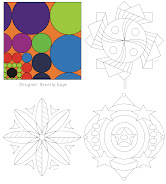
There are many creative apps for the ipad, but what is different about MoMA Art Lab ($4.99 NZ) is its link to the Museum of Modern Art (New York). Using 'simple' shapes and techniques children can explore colour, balance, shape whilst creating a work of art. Designs can be complex or 'simple' - and both stunning. Children can explore the processes of creating abstract modern art, and they can save their final creations to print and display. The MoMA Art Lab encourages group collaboration through the use of 'Create an exquisite corpse'. Based the age old game where friends draw different body parts on folded paper, children can create a surprise drawing together... ideal for a kindergarten setting. Above is the design created by three Manaia Kindergarten children. You can see them in action using the app together, on the Manaia Kindergarten blog - Drawing Together with MoMA.
The Art Lab tools that are provided for creations mimic techniques used by the Great Artists, and introduce young children to great paintings. Below is a YouTube clip highlighting many of the creative attributes of MoMA Art Lab for the iPad.
I have previously heard about this book. I thought I'd wait for the ipad app Press Here - LOL. However, on further research, I watched a youtube video of children interacting with this book. I realised that an ipad app would clearly contradict the message of the book. And, I believe, it would be a contradiction of Hurve Tullet's philosophy.
Hurve Tullet's books inspire me. I found a great video interview (2min) with Hurve Tullet, about his book Doodle Cook. As an artist and educator, this interview inspires me. I can imagine the possibilities with our children and I look forward to further exploring this artist, author and his books, with the children at Manaia Kindergarten.
"A fellow in the broadest sense is someone who is an equal or a comrade. The term fellow is also used to describe a person, ..... group of learned people who are awarded fellowship to work together as peers in the pursuit of knowledge or " happiness. - Wikipedia
You have heard of TED Talks - Ideas worth spreading. Now check out EDTalks - "a collection of video interviews, discussions and presentations featuring thought leaders, innovative educators and inspirational learners."
CORE Education has harnessed the ideas into a site for inspiring educators and learners from across the sectors, to share their provocative thoughts and inspiring challenges. Be encouraged to try new horizons...
When Manaia Kindergarten first began using the ipad, we couldn't help but download Talking Tom The children very quickly learnt that if you tickle or tap him he goes crazy and falls down. In a previous post I asked the question - Games or educational apps: What's the difference? Thank you Margaret for your response "What I am finding is that they are being used (as with desk top computers) by groups of children, thus stimulating discussion, social interaction, and shared learning experiences." Margaret also inferred that the learning she expected to happen, is not the learning that IS happening. Children set their own learning goals, explore intensively, learn and share. Here is a great example of an 'entertainment' app that certainly entertained, but also encouraged clear enunciation, turn-taking, well processed questioning skills, stimulating 'discussion' and social interaction.
Do a Google search "apps for young children" and inevitably you are provided with a selection of app icons showing cartoon characters, alphabet flash cards, peekaboo and nursery rhymes. Some of these are great (though never the flash cards!!) But our children deserve more! Our children are capable of more! I recently took an evening session in astronomy for children at our local school on camp. Unfortunately it was cloudy, so we turned to technology. In preparation for this, I had downloaded apps onto the Manaia Kindergarten ipad to use with the school children. The session went brilliantly (but more of that on another post). I left the apps on the ipad and took it back to Kindergarten. I did not alert the children to these new apps - I left them to make their own discoveries. Two weeks later, Otis's Nan brought this picture in to Kindergarten.
Otis told his Mum, "The sun is in the middle of our earth and the earth is going around and round the sun. The planet on the outside is Jupiter."
Wow - When did he learn this? His family had not spoken to him much about the solar system, but he does have a natural curiousity towards stars and planets. He had found the apps, explored them, and set up his own learning goals. Check out the app Otis explored.
Once you have zoomed into Planet Earth's solar system - you can manipulate it for a better look...
Otis clearly had some knowledge of the solar system - such as knowing about the existence of planets, the names of some planets - and he was able to further extend his knowledge by exploring the ipad app Exoplanet. This is a sophisticated app and through this app you can learn about other solar systems - enabling teachers and parents to learn alongside their children. There is huge potential for Otis to further extend his knowledge of solar systems because this app isn't "just for children". It doesn't limit knowledge to information we THINK children can handle.
I continue to search for apps that support children's interests and current knowledge....
In the meantime check out Exoplanet - an added bonus is that its free.
I'm just interested. I have been grappling with the kind of apps are acceptable on our Kindergarten ipad. I often hear teachers and parents say - "I don't want them to JUST play games"
So what do you see is the difference between a GAME and an EDUCATIONAL ipad app?
I was recently providing ICT professional development to a cluster of kindergartens. I was inspired by their desire and passion to learn, and to approach technology in early childhood education in a new way. As a final summary we concluded the following:
1. ICT is a tool. Use it to engage children with yourselves, each other and learning opportunities.
2. Technology for a purpose. ICT should be used throughout the curriculum. Scatter technology (computers, laptops, cameras, ipads) where it will be used for a purpose - digital microscope near a collection of bugs, natural resources, science specimens or close to the outdoors. Laptops with typing programmes in an area promoting literacy, cameras where children can easily access, take a photo of their name, and download photos when returned.
3. Start with one thing and do it well. The latest technology on the block can be cool, exciting, trendy to start with (like the ipad) - consider its long term appeal. Choose the thing that you think you can move forward on and commit to it. Make sure its achieveable.
4. Technology is not a babysitter - its a tool that should encourage collaborative learning and teaching. Engage in technology WITH the children.
5. Encourage children/students to be the teacher. You can learn a lot from them. Technology shouldn't be stored until YOU have mastered it - open it with the children and learn together. Encourage children to push buttons. Its unlikely to blow up. Learn from their desire to explore.
Thanks to Karen Boyes for sharing this on Facebook. Facebook is a great way to share educational ideas, theories and practices and a brilliant way to advocate for children everyday.
How did the current education system develop? Why do some thrive and some fail in this system? How do we improve the current educational system? How do we encourage all children to thrive?
Ken Robinson, illustrated by RSAnimate, answers... (persevere thru the first 45sec - its well worth it) Click the four arrows on the bottom right of the video to fill your screen with the illustrations.
What is the most important thing you want your children to learn before going to school? What skills and knowledge do you want them to gain through the school system? What do you hope they will become when they are adults?
I'm sure you have thought of this many times. Watching desperately, making sure they don't fall behind their age group, that they pass their assignments, test and exams.
What do you want for your children?
You may wish for your child to graduate from high school, go to university, gain an impressive qualification and enter a well paying job - to be a doctor, a lawyer, an architect.
What do YOU want for your children? IF they achieve the above -
Do you want them to love what they are doing? Do you want them to be able to communicate well with bosses, colleagues, employees? Do you want them to have friends? Do you want them to be kind hearted? Do you want them to be generous? Do you want them to like themselves? To be fit and healthy? Do you want them to continue to explore new ideas and initiatives? Do you want them to be happy?
Taking care of ourselves. Having friends and good relationships with colleagues. Confidently contributing and communicating our ideas. Researching and learning, exploring new concepts and ways of doing things.
THESE are the building blocks of a great citizen, a confident healthy happy person. THESE are the people we want to work and play with. THESE are the skills that children FIRST need to learn. Without them 'academic achievement is a long hard lonely slog. With these skills children develop a passion for learning, communicating, sharing ideas.
The building blocks begin in our young children - fit and healthy, surrounded by friends, variety of communication skills, ability to contribute, and a desire and passion to explore and continue learning. These are the goals of the New Zealand Early Childhood Curriculum.
I suggest they be YOUR goals for your children.
We remind ourselves of these things for ourselves through romantic, heartwarming youtube videos. Watch this one, and remember to nurture these things for children too.
Santé et beauté pour tous!! The Meaning of Life !!
Ok - I thought I should just put this out there and see where it takes me.
I would like to write educational apps for young children.
I would like those apps to fit my teaching style and philosophy - so I figure, I should probably just write them. I have some programming skills. They are fairly old school programming skills, but I believe my skills are upgradable.
Where do I go to learn to write apps? Any advice welcome.
This blog focuses on issues relating to children and teachers using ICT in education. I am a teacher at Manaia Kindergarten. We are part of the New Zealand Ministry of Education's CORE Education ECE ICT Professional Learning Programme. As a result of this programme I am specifically interested in the use of Information and Communication Technology to enhance children's learning and development. Our research question for the project focuses on building links between the Kindergarten and our wider community and how theses links benefit children. This blog is about my personal professional reflections and broader topics will be investigated from time to time as I advocate for the well being and empowerment of all children, and the upskilling of teachers in the implementation of ICT in education.





 Posts
Posts