Thursday, October 9, 2008

ULearn08 - 21Century Shift - Joan Dalton

What a dynamic speaker and a presenter of challenging thoughts. We all know that education is on the brink of huge change - Joan has visualised this in a very practical way. Looking back to the beginning of the 21century in 30years time what will we think of the classroom with four walls, one teacher and a set curriculum... when technology can connect the world, the students, the experts, each of any age or position in life. Young children teaching artists, primary children teaching the young mums and dads, students learning what they want when they want it because the resources will be (and in many cases already are) at our finger tips. "The world has changed, learning is limitless!" - J.Dalton

You will need high tolerance for experimentation and trial and error - risk takers will lead the way knowing that failure is ok - through trial and error we learn.
As teachers we need to facilitate and be language masters and inquirers. Lets grab the world of possiblities and get rid of words like "but...". "I Want you to...", "I'm going to give you some information that...." These comments assume the power stays with the teacher. We need to use a language of possibilities, the language of invitation , the language of inquiry and inclusion.That way we help children to self instruct - and maybe with these tools children will not lean towards self destruction.

Give yourself license to play - encourage play with possibilities
Believe in yourself.
Be wise - wise of mind, wise of heart, wise of soul.

A Whole New Mind - Daniel Pink

Tuesday, October 7, 2008

The Power of Questioning in ECE

Questioning - Surfing or Scuba Diving?
A workshop by Mary-Anne Murphy - Educational Facilitator
#ULearn08 - Christchurch.

What?

Why?
Who?
Where?
When
How?

Questioning is important because it helps us understand issues more deeply. It indicates that we have a level of curiosity about an issue and also helps to stimulate curiosity in others. Questioning promotes conversation and can take conversations to a new and deeper level. Questioning helps us to find an answer or address a curiousity... The importance of questioning is instictive in 2-3yr olds who start off life after establishing the words Mum, Dad, and various other vital labels, by asking "what's that?" and then deepening their questioning to ask "Why?"

The profile of a good questioner is someone who has a good level of curiosity and above all is prepared to take risks. They need a certain level of patience and persistance so that they are able to continue to ask their questions again and again until they are heard, or to be able to modify their questions so that they are understood.

The early years is a great time to encourage children's questioning. But it can also be a time that is so easy to discourage questioning. The 2yr old who asks "WHY?" until the only answer you can find is because if you believed in a God - is because God decided it would be so - may start to be ignored when asking questions.

So how do we encourage questioning in a manageable why for such young children? DO WE have to answer their questions with correct answers to encourage their questioning style - or at this particular age could this not lead rather to parents, teachers and caregivers going insane and resulting in a discouragement of questioning? Do they need us to have an answer to every question? What if we asked the children their ideas to the questions they ask? We might see some astonishing insights into the way our children see the world. Would it be better to correct their insights and theories or would we encourage a development of their questioning techniques if we let them work on their theories over time? I don't believe that we have to find and give the answers immediately. I believe it is much more fun to involve children in seeking the answers to their questions and I believe this would show children that we take their questions seriously and respect them for asking their questions.

Children do not always ask questions at times that suit our timetables, or home schedules. Maybe it would be good to have a place in our classrooms and homes where children can 'park' their questions. These questions can then be addressed over time and given the time to address them. This way we would be saying to children that we are listening and that there a no wrong/bad questions - they are all valid and together we can look for the answers.


What makes a good question?
Open ended question - one that requires more than one word answers
Relevant
Takes you to another level, another question
Acknowledging that in certain context closed questions are important.

Inspiring and developing questioning... (activity)
Give the answer - " the answer is 'tree' - what is the question?"

Questioning relationship
child <-> adult <-> child <-> child


Maybe encourage the children to create our ICT survey?

Return to NZ - Still connected to the network

What a fantastic experience I had in Italy and the Uk with my family. It was great to see we were still able to pick up where we left off - all together. Our physical network has been made stronger and we are still connected - emailing, skyping, sharing blogs. They are not that far away...

One thing I noticed while chatting late at night with my neice and interacting with my nephew, being involved in his correspondence schooling - is that technology in education is not a theory! It is real, it is happening, and the children are involved, engaged and using the technology in anyway they can.

Today I am sitting in the ULearn08 Christchurch auditorium. What I saw in my immediate family in Italy and the UK - is being talked about here in New Zealand in this keynote presentation. My nieces 14yrs and 16yrs are part of the technology network. I wander what guidance they have had to use these networks to create networks, to help them put their best foot forward in the social online globe, how are they using this technology to learn, grow, share, colaborate, prepare. I am hugely impressed by their abilities with technology - my hope is that their teachers guide them in a trustworthy way to gain the best for them. I am also incredibly proud of my 10year old nephew who is making fantastic leaps forward in his use of technology, putting his best work online, sharing his knowledge with others, networking with others in the online New Zealand correspondence community, extending his community by responding to the professionals who have been inspired by his blog, knowledge, and leadership in the online world of education... he is putting his best foot forward and creating his learning community.

Friday, September 19, 2008

Benefits of Skyping

"A family who Skypes together stays together"

Ok probably as debatable as the old saying "a family who prays together stays together" - but in this instance the skyping lifestyle has helped to keep my family, at least, together and deepened our relationships.

The young girl who blew me kisses over skype ended up costing me over three thousand dollars. And despite the miles that have separated us, we are as close, if not closer, than we have ever been. I couldn't mention it then, but the day after my two and half year old niece was taught by her other aunt to blow kisses to me over skype, I booked my ticket to Tuscany!! I had said I couldn't afford it - but those kisses made me do it. (see story on the ICTECT blog)

My entire family congregated in Tuscany and skyped me everyday. They were planning my fathers 70th, and in the end I decided the best birthday present for him would be for us all to be together. So with those two events in mind (the kisses and the birthday) I travelled to the UK on the 13th of September (now booking airline tickets online is something I need to re-consider - the travelling story is a whole other story). Through the use of technology, skyping, email, texting - I slowly made my way to the UK, then to Goring, and then along the canal tow path - and knocked on the door of my father's canal boat. Stuck in a canal boat, away from the internet and most communication, he had no clue of my imminent arrival. He was gob smacked and I had a great week on their canal boat despite the rising river and appalling weather.

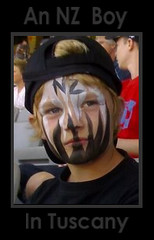
Then on to Tuscany to meet that little girl and my sister's family. Skyping has helped my nephew (check out his amazing blog about his time in Tuscany) and neice communicate with me on a regular basis, to see me, to hear my voice, to know me. Even as a two year old, Ana was able to pick up with me as we left off over six months ago. I also met up with my teenage neices in the UK. I haven't seen them for over two years. And again, via skype, blogging, and facebook our relationship is as comfortable as it ever has been.

Skyping has kept us all together. If you want to keep in touch, or rekindle your relationships with overseas family and friends, download skype today.

If you would like to know more about my adventures in Europe over the next three weeks check out treehouse dwellers. Next week I plan to skype Manaia Kindergarten children as they arrive at kindergarten for the day. Don't forget to visit next week to hear that story of skyping in education.

Friday, September 5, 2008

Can Technology benefit Eudcation?

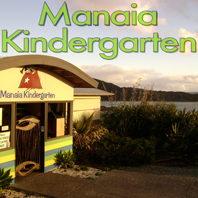
At Manaia Kindergarten technology has become integrated into the emergent curriculum.

Digital Photography
Children use technology to record and assess their learning. It has become a natural part of their kindergarten (and for some - home) lives. Children spend time creating sculptures with blocks, building volcanoes in the sandpit, or pushing their bodies to swing so high they can touch the shade sale... Then they grab a digital camera (or ask a friend or teacher to) and record their work. Quickly the analyse the images, return to their work, and perhaps modify their processes.

Movie Making
Later these same photos are often put together into a movie using Photostory3. Children again analyse their images - this time assessing which photographs best tell their story. The next step is to talk to their images and tell their story to an unseen audience. This can be tricky concept for children, so with the support of teachers they are sometimes encouraged to preview their movie and asked if they would like to make any modifications.

Blogging
Children now expect that their movies will be show cased on the Kindergarten blog. They know that when their movie is on the blog they can share it with their families at home. Families at Manaia Kindergarten are emailed when their children have an item on the blog. The blog has become a focus for parents to support the children's learning and to find out what is happening for their children at Kindergarten. They regularly leave comments for their own children and other children who share their learning.

Learning Stories
Images children create with the digital camera can also be used to create stories of learning. Using Comic Life children can easily select their images of choice and drag and drop them into picture boxes on the digital page. With the support of a teacher, they share the words they want typed on the page. Children have a large amount of control of the way the final page will look - choosing the background colour, font and colour of the title, and the shape of the speach bubbles in which to type their words.

Note: the suggestion is that Technology benefit Education - Technology is not the education.

To explore this further you need only visit schools and early childhood centre's who have integrated technology into their programme.
Check out these sites:
Manaia Kindergarten - New Zealand
Geraldine Kindergarten - NZ
Kindergarten Tales - USA
Greenwood Kindergarten - NZ
Nelson Central Primary - NZ

Technology benefiting teachers
You might also like to consider how technology benefits education by the way in which it builds professional community. When teachers are engaged in technology, sharing their knowledge, reading about the work of everyday teachers such as themselves, then the profession of teaching becomes richer - and thus in turn - children/students education benefits.

Read also:
The Benefits of Technology in Education: Real life anecdotes of Technology in use in Kindergarten
Technology for Teachers, Technology for Education

Thursday, August 28, 2008

Manaia Kindergarten Presentation

We at Manaia Kindergarten, are working towards a keynote presentation for CORE Eds ULearnO8 Conference. We are sharing the platform with other like minded professionals across the education sector. Our aim is to share with others what we are doing at Manaia Kindergarten, and hopefully inspire others in their ICT journey.

So what are we doing at Manaia Kindergarten? Well check out our blog for starters. Our aim was to build community - check out our Kindergarten blog and see if you agree that this tool is achieving this aim. At Ulearn we have 15mins to capture the excitement that is happening in our community... If you want to know more, at this stage , come along to ULearn. Just 15 mins - that's a challenge!

And then I came across this today in my professional reading - The Machine is Us by Dr. Michael Wesch. It is not altogether new (2yrs old is old on the web) - but I find it interesting as it succinctly (in 4mins) tells the story of what is happening with as a result of digital text. It is powerful! It makes you think. It sketches an inspiring exciting future. And it is succinct! Succinct is good. Succinct is powerful. It also encourages me to believe that the task ahead of us is possible, as much as the research we began (2yrs ago) has been powerful -it has been possible with the use of powerful tools... digital text.


Explore more of Michael Wesch's ideas here on the ICT ECE blog.


Wednesday, August 27, 2008

TED Talk - J. Harris: The Web's secret stories

Feeling a little under the weather, I thought I would rest, watch the sun play in the harbour from my bed, and catch up on a little ICT professional listening (prefer that to the readings!). Have you seen TED yet? TED talks, such as Ken Robinson's talk posted earlier this term on ICTECE, are mostly thought provoking, well executed and cutting edge. Check out the "Jaw Dropping" category. It was whilst browsing through this that I discovered Jonathan Harris and his amazing universe.

Who is Jonathan Harris?
Instead of re-inventing the wheel I shall quote Jonathan's profile on the TED pages.

"Artist and computer scientist Jonathan Harris makes online art that captures the world's expression -- and gives us a glimpse of the soul of the Internet."

And

"Jonathan Harris [is] a New York artist and storyteller working primarily on the Internet. His work involves the exploration and understanding of humans, on a global scale, through the artifacts they leave behind on the Web." Edge.org

And here Jonathan Harris tell's the secret stories of the web. (see a selection of responses to the video below).


Beverly Kaye – August 28 2008
"At Manaia Kindergarten, we are encouraging children to tell and share their stories, to express themselves and their world. They share these openly on their public blog. It is great to see Jonathan's amazingly creative approach to gathering such stories, and devising an art-form that allows us all to celebrate the importance of humanity's feelings, thoughts, and emotions, Amazing."

Allison Thagard – August 29 2007
"I love how Jonathan says that we leave our foot prints with the blogs that people write. All the technology in the world helps anyone to be able to leave pieces of ourselves to others, in the future."

samantha frost – February 23 2008
"I thought he gave a very well rounded and interesting presentation of what seems to be some great anthropological work. Look forward to viewing the websites!"

Clifton Burriss – June 10 2008
"Mr. Harris, how do you make a project like "We feel fine" and not spend an eternity reading all of that, let alone creating "Universe" which will truly be even more impossible to unravel every article? Man, I thought I couldn't get out of the chair with Youtube, Facebook, and Google, and then this fellow invents couple more info-distribution boards. Wow..."

NOW check out the UNIVERSE
And have a play...